How Often Should You Replace Your Toothbrush?
It's one of the most overlooked habits in oral care — most people keep using the same toothbrush long after it's stopped doing its job properly. Here's how often you should really be swapping yours out and the signs that tell you it's time.
The General Rule
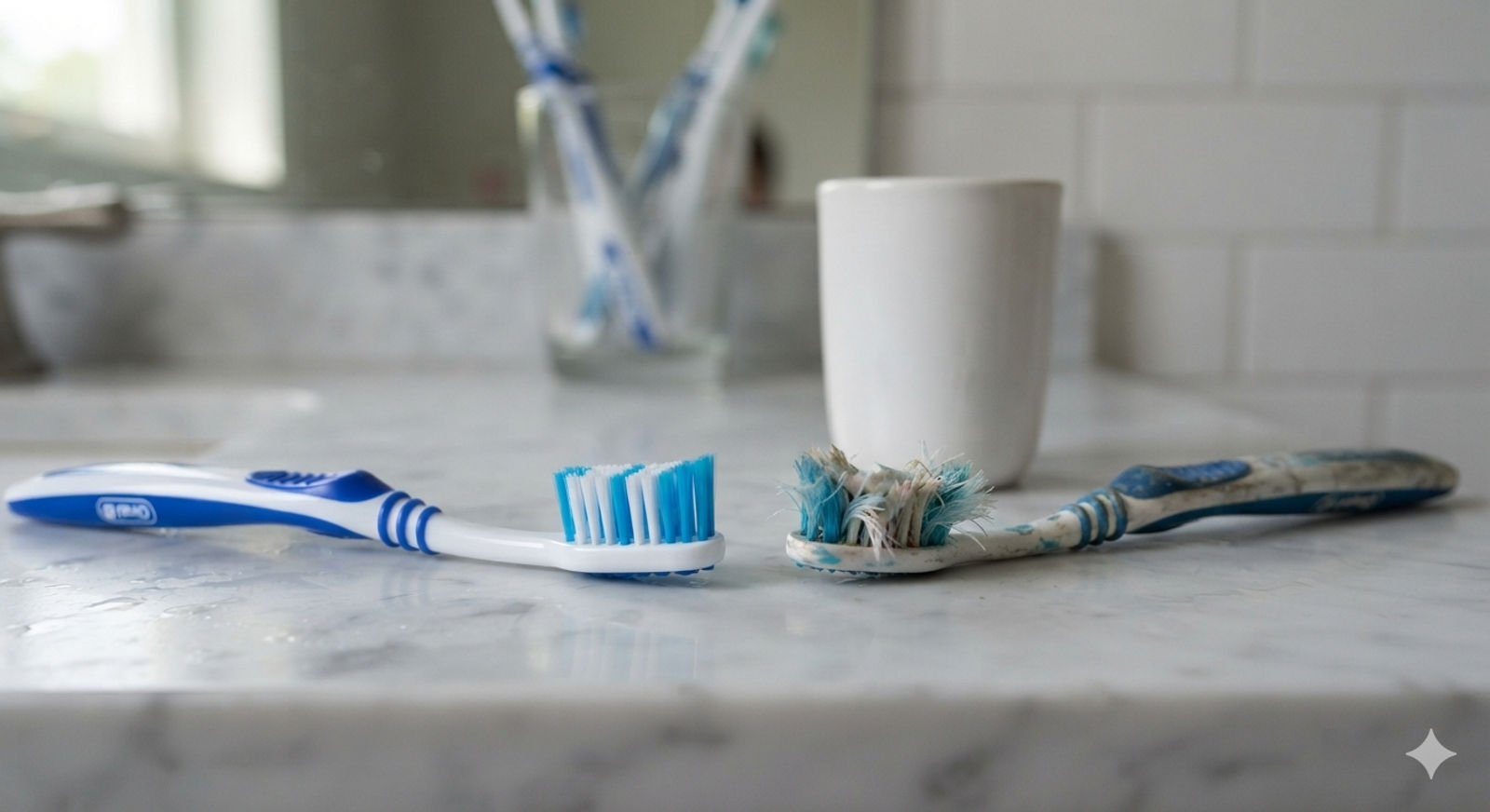
Dentists recommend replacing your toothbrush (or electric brush head) every 3 months. After that point, the bristles start to fray and lose their shape, which makes them far less effective at clearing plaque from your teeth and gumline.
Signs It's Time for a New One
- Frayed or splayed bristles — once they start spreading outward, they can't clean properly and may even irritate your gums.
- Discoloration — bristles that look dull, yellowed or stained are harder to keep hygienic.
- After an illness — swap your brush once you've recovered from a cold, flu, or any contagious infection to avoid reintroducing germs.
- Visible wear on electric brush heads — the same 3-month rule applies even though they look sturdier.
Why It Matters More Than You Think
A worn-out toothbrush doesn't just clean less effectively — it can also harbour bacteria in its bristles, especially if stored in a damp bathroom. Combined with poor cleaning, this can contribute to gum irritation and a higher risk of cavities over time, even if you're brushing twice a day like clockwork. Replacing your toothbrush regularly helps ensure that you are using a clean and effective tool as part of your daily oral hygiene routine.
Tips to Make Your Toothbrush Last (and Work Better)
- Rinse thoroughly after each use and let it air-dry upright, rather than storing it in a closed container.
- Avoid sharing toothbrushes, even briefly.
- Consider setting a recurring reminder every 3 months — it's easy to lose track.
- If you notice bristles fraying earlier than expected, you may be brushing too hard — a softer touch (and a soft-bristled brush) goes a long way.
What Type of Toothbrush Should You Use?
For most people, a soft-bristled toothbrush is a good choice. A toothbrush should be comfortable to hold and allow you to reach all areas of your mouth, including the back teeth.
Both manual and electric toothbrushes can be effective when used correctly. If you use an electric toothbrush, remember that the brush head also needs to be replaced regularly according to the manufacturer's recommendations or when the bristles become worn. If you are unsure which toothbrush is suitable for you, your dentist can recommend one based on your oral health needs.
If it has been a while since your last dental check-up, book an appointment with DMH Dental and let our dental team help you maintain healthy teeth and gums.